
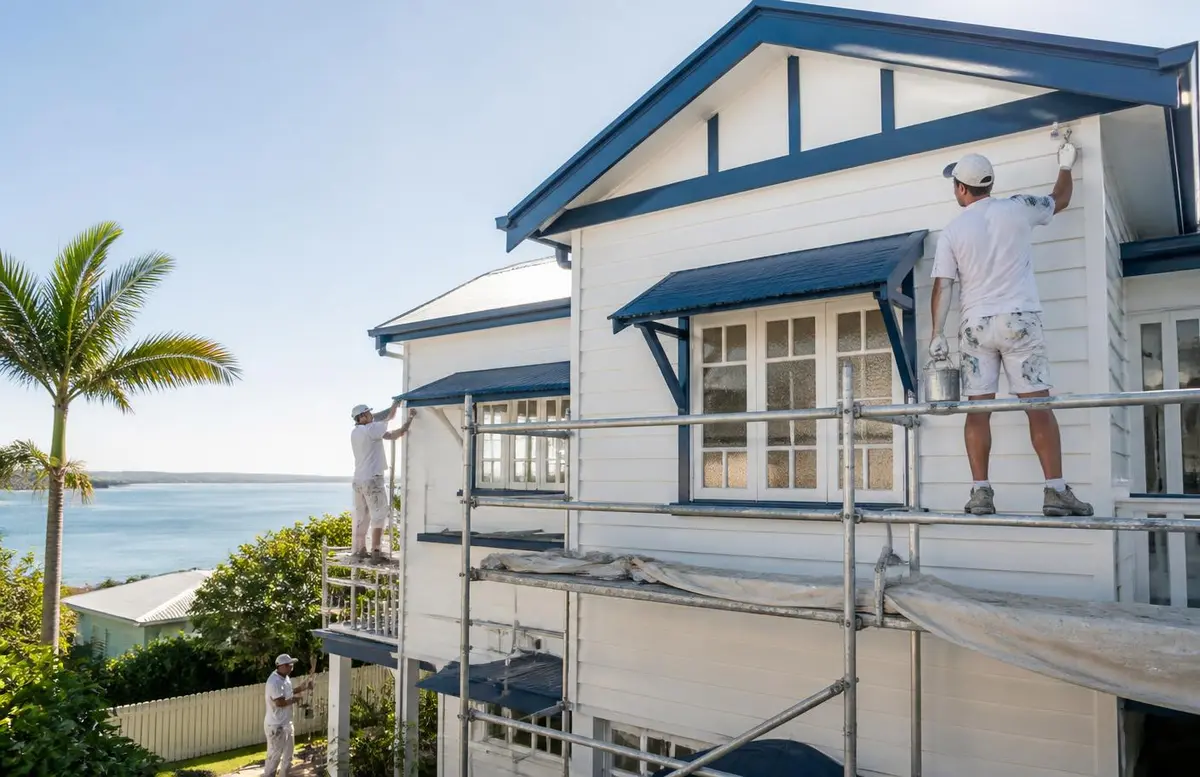
A trustworthy painting quote in Geelong is never a guess pulled out of the air. It comes from a proper walk-through of your property, an understanding of how our cool-temperate climate treats different substrates, and a clear picture of the preparation your home actually needs before a brush touches a wall. Knowing how that process works — and what belongs in a written scope — puts you in a strong position when comparing quotes from painters working across Newtown, Belmont, Highton and out towards the Bellarine.
What a Painter Actually Measures and Assesses
Before any figures come together, an experienced painter walks the whole property and looks well beyond square metres of wall. They take in total surface area, storey count, roof pitch and how easily eaves can be reached, the condition of the existing coating, the substrate (timber, render, brick, fibre cement, Colorbond), and how exposed the home is to wind and weather. A home on an open block near Ocean Grove or Barwon Heads that catches salt-bearing wind off the bay is assessed quite differently to a sheltered home in Highton or Grovedale, because that coastal exposure changes how many coats and how much prep are genuinely needed.
They will also check for damp patches, rotting timber, flaking or chalking paint, rust bleed from fixings, mould on shaded south-facing walls that stay wet through our cold winters, and any cracking in render. Each of these adds hours to the job that need to sit in the scope rather than be quietly absorbed or ignored.
The Main Cost Drivers Explained
Every quote is built from a set of variables working together. None can be boiled down to one number without seeing the property in person, but understanding them will help you make sense of any quote in front of you.
- Total area to be painted, including walls, eaves, fascia, gutters, trims and doors
- Number of storeys and what access gear is needed (ladders, scaffolding, extension platforms)
- Current condition of the surface — sound paint needs far less prep than chalking, peeling or cracked coatings
- Substrate type and how many coats of primer or sealer are required before topcoats go on
- Number of finish coats specified — most Geelong exteriors need at least two given our winter damp and summer UV
- Product grade chosen, since higher-build acrylics and coastal-rated systems cost more but hold up better near the bay
- Complexity of trim work, feature colours, and how many colour changes are involved
- Site access — narrow side passages, plantings hard against walls, pools and vehicle access all affect labour time
Prep vs Paint: Where the Labour Really Goes
Preparation Hours
On most repaint jobs, preparation eats up more labour than the actual painting. That includes washing down the house to remove salt film and grime, scraping and sanding failed paint, spot-priming bare timber or rusted fixings, filling cracks, masking windows and fittings, and protecting gardens, paths and outdoor furniture. On homes closer to the water at Torquay or Barwon Heads this stage matters even more — paint applied over salt residue or a chalky surface will fail early no matter how good the product is.
Application Hours
Once prep is finished, actually applying the paint is comparatively fast, especially with spray or roller systems over larger wall areas. This is why two quotes at a similar total price can hide very different amounts of real preparation — a much shorter timeframe from one painter over another is worth questioning rather than assuming it's a bargain.
How Quotes Should Be Structured
A transparent quote separates out the scope clearly enough that you can see exactly what you're paying for. Look for a breakdown identifying the areas to be painted, the prep work included, the number of coats, the specific products and sheen levels proposed, and any exclusions.
Surfaces and areas covered, substrate-specific prep steps, primer and sealer requirements, number of coats, product brand and range, colour and sheen specification, site protection measures, an approximate timeframe, and clear exclusions such as timber replacement or major rot repair being quoted separately.
Comparing Quotes Fairly
Comparing quotes on the bottom line alone tells you very little. Line the scopes up side by side and check whether they cover the same areas, the same number of coats, and comparable product quality. A quote that leaves out fascia and gutters, or specifies one topcoat where another specifies two, will naturally read differently — but the two aren't equivalent offers.
- Confirm each quote covers the same physical areas of the house
- Check the number of coats specified for both primer and topcoat
- Compare the product range and grade named, not just "quality paint"
- Look for what prep work is explicitly included versus assumed
- Ask whether site protection, cleanup and waste removal are included
- Check whether the quote is fixed price or subject to variation once work starts
Red Flags in Cheap Quotes
A quote that lands well below the others for what looks like the same job deserves scrutiny rather than excitement. Common shortcuts include skipping a proper wash-down before painting, reducing two coats to one, using trade-grade low-build paint that won't cope with our bay winds and UV, and vague scopes that leave prep undefined so it can quietly be skipped.
No written scope, verbal-only pricing, refusal to name the paint product and range, unusually short timeframes for a large exterior, requests for full payment upfront, and no mention of surface preparation at all.
Questions Worth Asking Before You Accept a Quote
- What preparation is included, step by step, before painting begins?
- Which specific paint product, range and sheen level are you proposing, and why?
- How many coats of primer and topcoat are included?
- How will you protect my gardens, paths, windows and outdoor areas?
- What happens if you find rot, cracking or other damage once prep starts?
- Is the price fixed, or can it change once work is underway?
- What is excluded from this quote?
Why Access and Storeys Matter So Much Locally
Many established Geelong homes in Newtown and Belmont sit on sloping blocks with retaining walls and tight side access, which changes what equipment is needed to reach every elevation safely. A single-storey brick home in Grovedale with clear all-round access is a very different job to a two-storey Waurn Ponds home on a steep block where scaffolding or specialised extension gear is required to reach high gables. This access complexity is one of the most commonly underestimated cost drivers in DIY comparisons.
Seasonal Timing and Its Effect on Scheduling
Quotes also factor in the time of year. Geelong's cold, wet winters bring shorter daylight, heavier dew and slower curing times, which narrows the practical painting window and can affect scheduling flexibility. Painters generally prefer to schedule larger exterior jobs across the warmer, drier months where possible, and a realistic quote should acknowledge weather-dependent timing rather than promising a fixed start date regardless of conditions.
Understanding Paint Product Types and Why They're Priced Differently
Not all paint labelled "exterior acrylic" is equal, and this is one of the least understood parts of a quote. Entry-level trade paints use less resin and lower-grade pigments, which keeps material cost down but shortens service life against our salt-bearing wind and strong summer UV. Mid-range and premium ranges use higher resin content, better UV-stable pigments, and often extra additives for flexibility and mould resistance. Coastal-rated ranges go further again, formulated specifically to resist salt-driven film breakdown, which matters most for homes near Ocean Grove and Torquay. A quote should always name the specific product range being proposed, not just the brand, since two products from the same brand can sit in very different tiers.
Primers and sealers are priced and chosen separately from topcoats, and this is often where corners get cut. Penetrating timber primers, stain-blocking sealers, masonry sealers and rust-converting metal primers each do a specific job, and swapping in a cheaper universal primer to save time can undermine the whole system even where the topcoat itself is high quality. When comparing quotes, ask what primer or sealer is proposed for each substrate on your home, not just the topcoat.
Common Mistakes Homeowners Make When Budgeting for a Repaint
The most frequent mistake is comparing a single bottom-line figure across quotes without checking that the scope, coats and products genuinely match. A close second is underestimating how much a home's specific problems — timber rot, extensive cracking, persistent mould, or difficult access — will change the final scope once a painter is actually on site. Homeowners also sometimes assume "two coats" automatically means two full, opaque coats, when in some scopes it can mean one thinner coat plus a light second pass, which is a very different result.
- Comparing total price without confirming the areas, coats and products match
- Assuming all "exterior acrylic" paint is the same grade and durability
- Not asking what happens if rot or extensive damage is found once prep starts
- Booking a large exterior job in the depths of winter without discussing weather contingency
- Overlooking small but time-consuming areas like window frames, downpipes and fencing in the scope
- Not confirming who supplies the paint and whether the brand and range are specified in writing
How Long a Proper Assessment and Quote Should Take
A rushed drive-by estimate rarely captures the detail an accurate scope needs. A proper on-site assessment involves walking every elevation, checking accessible roof areas, testing suspect timber for soundness, and talking through your colour and product preferences before a written quote is put together. If a quote arrives without anyone having walked the property, or within minutes of arriving for a larger job, it's reasonable to ask exactly how that figure was calculated.
If a workmanship warranty is offered, ask specifically what it covers — application defects such as premature peeling from poor prep are different from normal weathering, fading or wear, which no coating warranty extends to indefinitely. A clear written explanation of warranty terms is part of a transparent quote.
Getting the Timing Right for Your Budget and the Weather
Beyond the winter slowdown, cool mornings and dew affect drying and curing times for much of the year in Geelong, which can influence how a job is staged and how long crews need on site. A painter who builds realistic weather contingency into a quote, rather than promising an unrealistically tight timeframe, is generally giving you a more honest picture of what the job will actually involve. If your budget or timeline is tight, ask whether starting prep in a settled stretch and staging the final coats afterwards is an option, rather than committing to a fixed block of consecutive days regardless of forecast.
Get a Clear, Written Quote for Your Home
If you would like a proper on-site assessment with a clear, itemised scope of work for your Geelong home, our team is happy to walk you through exactly what your property needs and why. Call for a free quote or send the quote form on this page, and we'll arrange a time that suits, Monday to Friday 7am–5pm or Saturday 8am–12pm.
Questions about your own property?
Call NowFor a local assessment, explore our house painting service in Geelong or ask about work in Newtown.
Request an on-site painting assessment